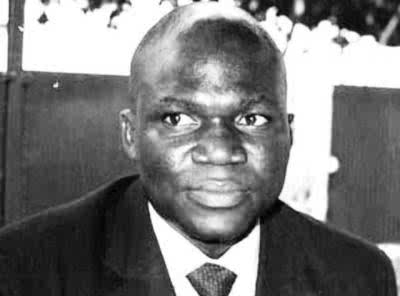
The destruction of stars among us is a favourite Nigerian pastime. Even our foremost nationalists, including Chief Obafemi Awolowo and Dr. Nnamdi Azikiwe, were verbally attacked at one time or the other. Dele Giwa was killed by a letter bomb for being too good an investigative journalist. Dr. Reuben Abati happens to be the current victim of this national malaise. Everyone acknowledges that he is one of the finest columnists of our time—bright, intelligent, resourceful and eloquent with the pen. He is universally acknowledged as a good servant of the people in this role.
It is not his performance of this role that is under attack but his choice of a new role in public service, that of Special Adviser on Media and Publicity to President Goodluck Jonathan, and what he has been doing in that role since he assumed office. There have been times when the vitriolic attack on him in this new role almost submerged his stellar achievements in his previous role. This is why envy is suspected in some quarters as a motivation for some of the criticisms.
To be sure, even some of Abati's friends and admirers were apprehensive as I indicated in "Abati and Kolapo: From journalism to politics" (The PUNCH, July 11, 2011). Why would Abati, who recognised and wrote about Jonathan's weaknesses, serve a President that weak? Perhaps, he wanted to learn about the inner workings of the Presidency. Perhaps, he even thought he could bring about some change. What he did not foresee was that Jonathan's weaknesses would be compounded by the excesses of his overambitious wife.
Be that as it may, many an Abati detractor criticised him for crossing over from journalism to the political arena, and they were always ready to blame him each time Jonathan fumbled. Nobody cared about the exigencies of political decision-making or of a President's prerogative to reject advice, as former President Olusegun Obasanjo once bragged.
This is not the first time Abati would come under attack. Long before his new appointment, some online commentators adopted a holier-than-thou posture in criticising him over an alleged Abuja land deal. Suddenly, he became greedy and corrupt, as if it is not within his right to purchase land anywhere in the country. This group of critics overlapped with another group, which felt that Abati had forsaken the masses he used to defend in his columns by accepting a presidential appointment. He was no longer one of "us" but one of "them".
The critics thought they found justification about six months into Abati's new role, when it was rumoured that he had been sacked or forced to resign his appointment owing to his alleged poor handling of the President's image over growing security challenges and the fuel subsidy crisis.
They must have been disappointed when Abati debunked the allegations: "It is not true. I am at my duty post, loyal and faithful. And if it is that I should resign, well it is just their own wishful thinking, okay, which will not happen." What many critics and reporters missed at that press conference was Abati's clarification of his role as the defender of "government's key policies in both local and international media" (my emphasis).
If critics had paid attention to this statement, they probably would not have felt further justification for their criticism when the President's wife, Mrs. Patience Jonathan, reportedly expressed disappointment in Abati's inability to defend her and her husband from media attack. She was reportedly further enraged when Abati insisted it was not his duty to defend her. This amplified Abati's definition of his role as a defender of the government's policies, not of Oga's misbehaviour or his wife's.
Everyone acknowledges that Jonathan and his wife are the architects of their media misfortunes. Who would want to defend Jonathan's bad timing of subsidy removal and his unconstitutional action in renaming the University of Lagos? These actions had grave consequences, including mass protests which led to fatalities. Yet, the illegality continues in the case of UNILAG as the government continues to refer to the institution by a different name, despite a court injunction that the status quo be maintained until September 21, 2012. Until that date at least, UNILAG cannot legally transact business in any other name.
Similarly indefensible are Mrs. Jonathan's fight with Mrs. Turai Yar'Adua over a piece of Abuja land; her ill-advised suggestion that the job of the First Lady be included in the constitution so she could draw benefits; and her recent promotion to the position of Permanent Secretary 13 years after leaving the Bayelsa civil service.
Criticisms trailed Jonathan and his wife over these errors of commission. As a first rate professional, Abati would have been blamed had he defended what everyone else has condemned. If Dr. Doyin Okupe was appointed as Senior Special Assistant on Public Affairs to do this job, then it does not diminish Abati's job as Special Adviser on Media and Publicity.
Anyone familiar with the government's allocation of duties at federal and state levels would know that Special Advisers are higher in rank than Special Assistants, even when "Senior" is prefixed to the latter. True, their jobs overlap if they work within the same ministry or department but significant differences remain in status and function. Advisers are generally closer to their bosses and work directly on policy matters, while Assistants are often further removed and work on special assignments. Unlike Abati, Okupe is to act as an attack dog. Chief Femi Fani-Kayode, nicknamed OBJ's Attack Dog, acknowledged this when he congratulated Okupe for being appointed to his old job.
Jonathan's appointment of Okupe, while also retaining Abati, is an acknowledgement of Abati's role as defender of policies, not of personal missteps and misspeaks. Mike Ikhariale got this right when he wrote that, in "the new organogram of the image-making department" of the Presidency: Abati continues to take charge of policies, including the "intricacies of government activities within and outside the country", while Okupe manages the government's "propaganda portfolio", including "fighting dirty in the media" (The PUNCH, August 5, 2012).
Say what you will, Abati remains one of the few credible faces in the Jonathan Presidency. We should respect his choice to join the team and allow him to do the best he can. Given the numerous challenges facing the nation, there are more important topics to discuss than speculations about his job security.
Punch News
 using WordPress and
No responses yet